


The Complete Guide to Finding Your Perfect Foundation Shade (Including UK Brands)

Choosing the right foundation shade is one of the trickiest tasks in makeup — yet when you get it right, it makes a huge difference to how natural and seamless your look is. With so many products available in the UK market, finding the correct match involves understanding your skin tone, undertone, depth, finish preference and even seasonal changes. This guide walks you through everything you need to know — plus highlights UK-brand tools and strategies to help you select confidently.
1. Understand Skin Tone vs Undertone
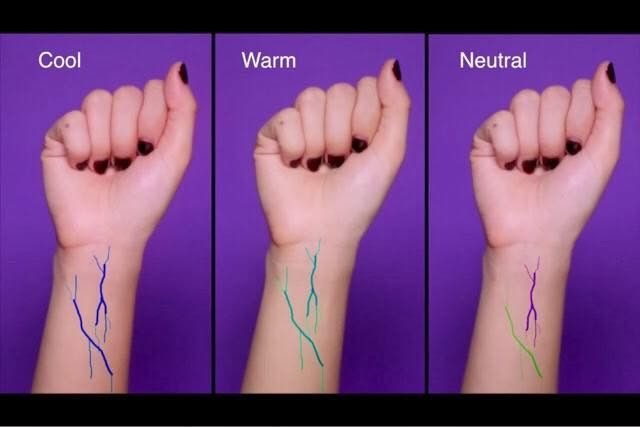


A foundational step in matching your foundation shade is knowing the difference between your skin tone (how light or dark your skin is) and your undertone (the subtle hue beneath the surface of your skin). According to UK beauty expert guides:
- Undertones are typically classified as warm (yellow/golden), cool (pink/blue) or neutral (a mix). (Clarins UK)
- You can often check by looking at the veins in your wrist: blueish = cool, greenish = warm; if you can’t tell, you may be neutral. (Clinique)
Getting this right means you’ll avoid shades that look “off” — for instance too pink or too yellow.
UK tip: Many UK-brand tools (like No7, Clarins) include undertone quizzes or virtual matchers to simplify the process. (No7 Beauty)
2. Determine Your Skin Depth & Shade Range


Once you know your undertone, the next dimension is shade depth — how light or dark your skin is.
- UK guides emphasize testing foundation along the jawline or neck (not just the hand or wrist) so the colour flows naturally into your body. (Marie Claire UK)
- When testing, apply 2-3 shades side-by-side and check in natural light to see which one “disappears” into your skin. If you still see a line, it’s not the right match. (Marie Claire UK)
Pro tip: Your face may be slightly lighter or darker than your neck due to sun exposure, so always compare to the neck for best match.
3. Use Online & In-Store ‘Shade Finder’ Tools
Thanks to technology, many UK brands and global ones offer shade-finder tools that make matching faster. Some examples:
- The L’Oréal Paris “Match My Shade” uses AI and a selfie video to match your skin tone among 45,000 tones. (L’Oréal Paris)
- The Lancôme “E-Shade Finder” lets you scan a 360° selfie to identify your ideal shade. (Lancome)
- Many stores in the UK (department store counters, Boots, etc) offer an in-person match with testers. As one UK Redditor notes: “Go to as many make-up counters as possible… swatch the shades on your actual face at least 2-3 different shades side by side.” (Reddit)
How to make the most of them:
- Before you buy online, use a shade-finder tool to narrow down 2-3 possible matches.
- Then, try the sample in store or take a small sample home if possible.
- Always check how it looks under different lights (natural daylight, indoor lighting, flash) and after 30-60 minutes (to account for oxidation).
4. Test Correctly: Where, How & When
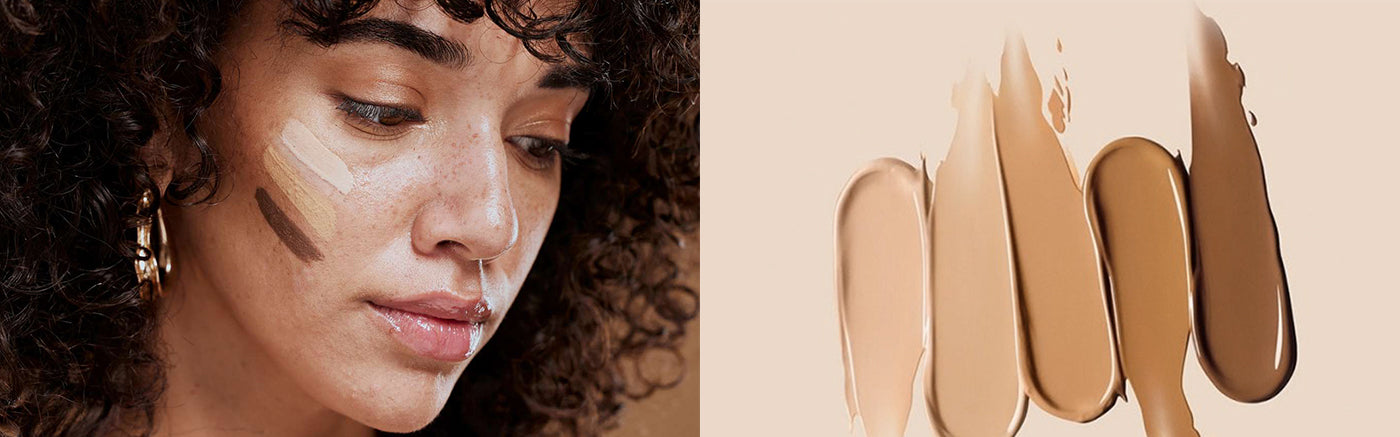

Testing foundation properly is half the battle. According to the UK Marie Claire guide:
- Don’t test on your hand alone. Use your jawline and/or neck so the tone matches your face+body. (Marie Claire UK)
- Always test on bare skin (no other makeup) so you get the true match. (Clarins UK)
- Check the shade in natural daylight. Many store lights distort colour. (Marie Claire UK)
- Try the foundation for a few hours — see how it oxidises or changes with your skin’s oil. (Marie Claire UK)
UK-specific tip: Since UK lighting (cloudy skies, indoor lighting) differs from bright sun, if you do an outdoor test, do it during daylight. Also check how it looks under typical office/indoor lighting.
5. Match UK Brand Shade Naming & Undertone Codes
Different brands have different naming systems — understanding them helps when switching brands. Example:
- At M·A·C (UK website) they use letters & numbers: e.g., “NC” (Neutral Cool) for warm-olive undertones, “NW” (Neutral Warm) for cool/pink undertones. (MAC Cosmetics)
- At Clinique UK: letters like “WN”, “CN” denote Warm-Neutral or Cool-Neutral undertones. (Clinique)
When you know your previous brand & shade, you can use “shade-match” tools (e.g., Findation) to find equivalents in other brands. (Findation)
6. Consider Skin Type, Finish & Seasonal Changes

Shade match is only part of the equation. To get the right foundation overall, you must also consider:
- Skin type (oily, dry, combination) – some formulas suit your skin better. (Clarins UK)
- Finish: matte, natural, dewy. The undertone and depth may shift slightly depending on finish.
- Seasonal variation: Your skin may tan or lighten across seasons (especially in the UK where sunlight is variable). UK beauty guides recommend testing your match periodically. (Trinny London)
Tip: You may buy a slightly darker or lighter variant for summer/winter or mix two to adapt.
7. Avoid Common Mistakes & Know Troubleshooting

Here are frequent pitfalls and how to avoid them:
- Buying in bright store lighting and later finding it doesn’t match outdoors. Always check natural light. (Reddit)
- Choosing the wrong undertone (pink vs yellow) which leads to orange or ashy finish.
- Not accounting for oxidation — some foundations darken after application.
- Only testing on hand or wrist rather than jawline/neck.
- Ignoring that your face tone may be different to your body or neck.
Troubleshooting: If your foundation is slightly off, you can mix it with a darker or lighter formula, or use bronzer/highlighter to tweak the tone. (Recent advice highlights this as well). (Woman & Home)
8. Top UK Brand Tools & Shade Finders (Quick Reference)
Here are some standout tools in the UK market:
- No7’s “Personalised Foundation Analysis” – A selfie-based AI tool matching your skin tone & preferences. (No7 Beauty)
- L’Oréal Paris “Match My Shade” tool – Selfie + AI to identify shade among 45,000. (L’Oréal Paris)
- Lancôme “E-Shade Finder” – 360° selfie video to match their Teint Idole range. (Lancome)
- Clarins “How to Choose Foundation Shade” online guide – step-by-step undertone & depth identification. (Clarins UK)
Using these tools before committing to full size can save you money and avoid mismatches.
9. Step-by-Step Checklist to Find Your Match


Here’s a practical checklist you can follow:
- Identify your undertone (warm / cool / neutral).
- Estimate your shade depth (light / medium / dark) via neck/jawline.
- Use an online shade-finder tool or visit a UK counter.
- Test 2-3 candidate shades on your jawline (bare skin) and view in natural light.
- Wear the shade for a few hours to test oxidation and how it blends with your body tone.
- Check for texture, finish and how it sits on your skin type.
- Once match is confirmed, purchase or sample.
- Recheck after a few months (skin tone may shift) or when seasons change.
Conclusion
Finding the perfect foundation shade in the UK doesn’t have to be a guessing game. With the right understanding of undertones, depth, and the tools available — you can confidently select a shade that blends seamlessly into your skin rather than standing out. Remember: match to your face and neck, test in natural light, use reputable shade-finders, consider your skin type and seasonal shifts, and don’t rush the purchase. With these steps you’ll spend less time trying and more time enjoying flawless makeup.
